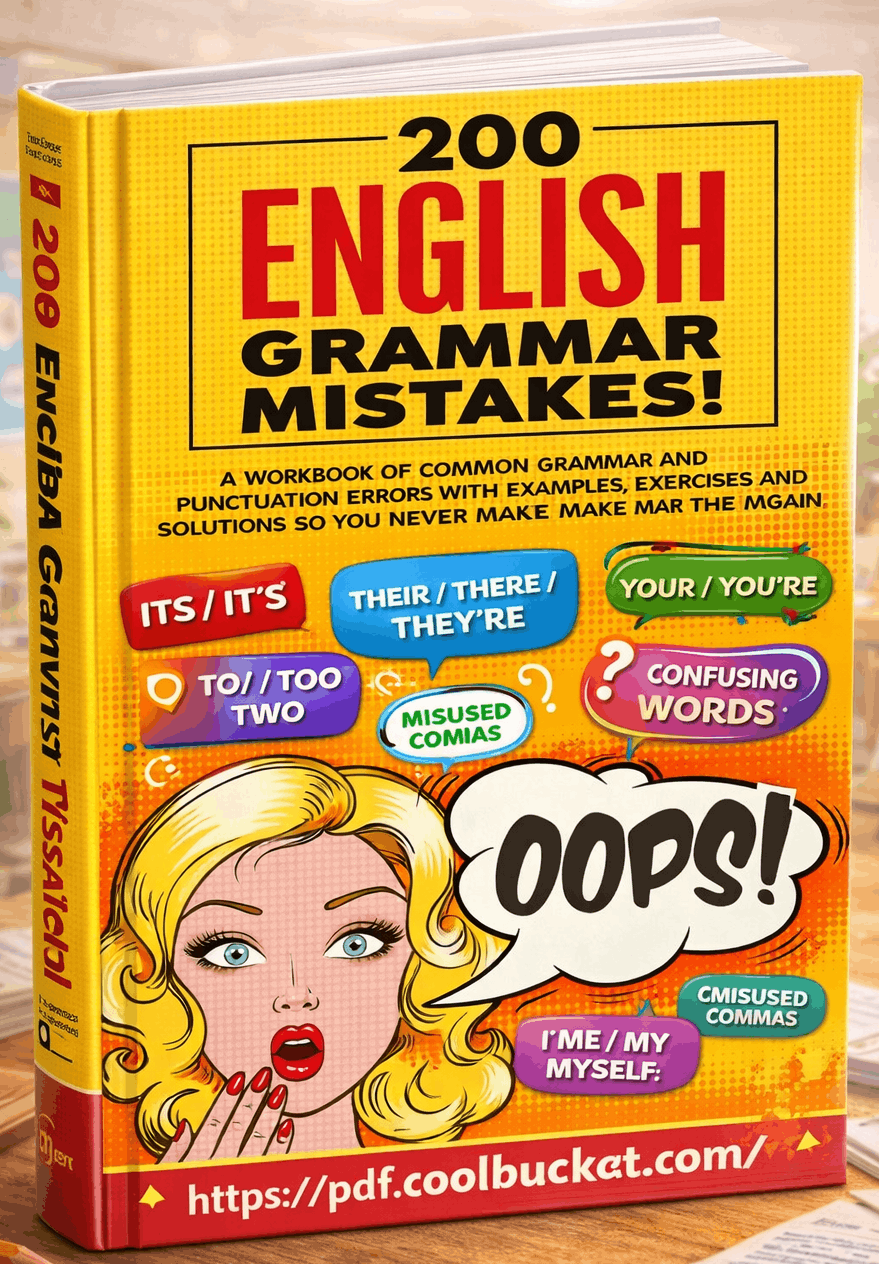
200 English Grammar Mistakes!
200 English Grammar Mistakes Explained for Clear Communication
200 English Grammar Mistakes! This phrase may sound overwhelming, but the truth is that most English learners repeat the same types of errors again and again. These mistakes appear in speaking, writing, emails, exams, and even professional communication. They do not happen because learners are careless. Instead, they happen because grammar rules are often misunderstood or applied without context.
This article explains the idea behind the most common English grammar mistakes, why they occur, and how learners can reduce them step by step. Rather than listing hundreds of rules, the focus is on patterns, clarity, and practical improvement. The content is blog-friendly, easy to read, and optimized for SEO.
Why English Grammar Mistakes Are So Common
English is a global language. Most learners study it as a second or third language. Because of this, grammar is influenced by the learner’s native language. Sentence structure, verb usage, and word order are often transferred incorrectly.
Another reason is overload. Learners try to remember too many rules at once. As a result, confusion increases and mistakes become frequent.
Understanding patterns is more effective than memorizing hundreds of rules.
Grammar Mistakes in Spoken vs Written English
Spoken English is flexible. Short sentences, missing subjects, and informal expressions are common. Written English, however, requires structure and accuracy.
Problems occur when spoken grammar is used in writing or when written grammar is forced into speech. This mismatch creates many common errors.
Awareness of context helps reduce these mistakes significantly.
Common Sentence Structure Mistakes
Sentence structure errors are among the most frequent grammar problems.
Many learners:
- Place words in the wrong order
- Forget the subject or verb
- Use very long sentences without clarity
English generally follows a subject–verb–object pattern. When this structure is followed, clarity improves immediately.
Simple sentences reduce confusion.
Subject–Verb Agreement Errors
One of the most repeated grammar mistakes involves subject–verb agreement. Learners often forget to match the verb with the subject.
For example:
- Incorrect: She work every day
- Correct: She works every day
This mistake increases during fast speaking. Regular practice helps build accuracy.
Tense Confusion and Time Errors
Tense mistakes form a large part of the so-called 200 English Grammar Mistakes! Learners often mix past, present, and future without noticing.
This happens because English has many tense forms. Learners focus on meaning and forget consistency.
Choosing one tense and maintaining it improves clarity instantly.
Overuse of Continuous Tenses
Many learners overuse the present continuous tense because it feels active.
For example:
- Incorrect: I am knowing him
- Correct: I know him
Understanding which verbs are stative helps reduce this mistake.
Article Errors: A, An, and The
Articles are small but powerful words. They cause confusion because many languages do not use them.
Common mistakes include:
- Omitting articles
- Using the unnecessarily
- Confusing a and an
These errors improve gradually through reading and listening rather than memorization alone.
Preposition Mistakes That Never Seem to End
Prepositions such as in, on, at, for, and since are among the hardest parts of English grammar.
Learners often choose prepositions based on logic, but English does not always follow logic. Usage depends on convention.
Exposure and repetition are the best solutions here.
Confusing Similar Words
Many grammar mistakes come from confusing similar words such as:
- Much / many
- Few / little
- Since / for
- Do / make
These mistakes are common because meanings overlap. Learning them in context improves understanding.
Pronoun Errors in Daily English
Pronoun mistakes happen when learners are unsure about reference.
For example:
- Incorrect: Everyone forgot their book (formal writing issue)
- Incorrect: Me and him went there
Pronouns must match both grammar and context. Awareness improves usage over time.
Plural and Countable Noun Mistakes
Learners often forget plural endings or use uncountable nouns incorrectly.
For example:
- Incorrect: Many informations
- Correct: Much information
Understanding countable and uncountable nouns reduces many errors quickly.
Passive Voice Misuse
The passive voice is useful but often overused. Some learners believe it sounds more advanced.
In spoken English, active voice is usually better. In formal writing, passive voice may be appropriate.
Choosing correctly improves both clarity and style.
Run-On Sentences and Punctuation Errors
In writing, punctuation mistakes are very common. Long sentences without commas or full stops reduce readability.
Breaking ideas into shorter sentences improves understanding and SEO performance.
Clear writing reflects clear thinking.
Direct Translation Errors
Many grammar mistakes happen when learners translate directly from their native language.
Word order, tense usage, and expressions often change meaning when translated literally.
Thinking in English rather than translating helps reduce this issue.
Why Memorizing Rules Does Not Fix Mistakes
Many learners try to memorize grammar books. However, grammar is a skill, not just knowledge.
Without speaking and writing practice, rules remain inactive. Mistakes continue despite memorization.
Usage turns rules into habits.
How to Reduce Grammar Mistakes Effectively
The best way to reduce errors is through awareness and repetition.
Reading helps learners absorb correct patterns. Listening improves spoken accuracy. Writing reinforces structure.
Small daily practice brings long-term improvement.
Learning From Mistakes Instead of Fearing Them
Mistakes are not failure. They are feedback. Each mistake shows what needs attention.
When corrected calmly and practiced again, mistakes disappear naturally.
Confidence grows when fear is removed.
Grammar Mistakes in Exams and Professional Life
In exams, grammar mistakes reduce scores. In professional life, they affect clarity and impression.
Simple grammar accuracy creates trust and professionalism.
Clear English creates strong opportunities.
Using Tools Wisely
Grammar tools and apps help identify mistakes. However, they should support learning, not replace it.
Understanding why a mistake happens is more important than correcting it once.
Awareness leads to independence.
Spoken Grammar Mistakes Are Normal
In spoken English, mistakes are normal. Even native speakers do not speak perfectly.
The goal is clarity, not perfection. Communication matters more than accuracy in conversation.
Relaxed speaking improves fluency.
Written Grammar Needs More Care
Written English stays visible. Because of this, grammar accuracy is more important.
Editing and reviewing help reduce mistakes. Writing slowly improves quality.
Good writing reflects strong thinking.
The Real Truth About “200 Grammar Mistakes”
The idea of 200 English Grammar Mistakes! does not mean learners must memorize hundreds of rules. Most errors fall into a few common categories.
Once patterns are understood, many mistakes disappear together.
Smart learning is about patterns, not pressure.
Final Thoughts
English grammar mistakes are part of every learner’s journey. They happen because English is flexible, global, and context-driven.
By understanding common patterns behind errors, learners gain control over their language. The fear of making mistakes fades, and confidence grows naturally.
Instead of worrying about 200 English Grammar Mistakes!, focus on clarity, practice, and progress. With patience and consistency, accurate and confident English becomes achievable.
Comments (0)